
Nikro Air Duct Cleaning in Forest Hills: A Homeowner’s Guide
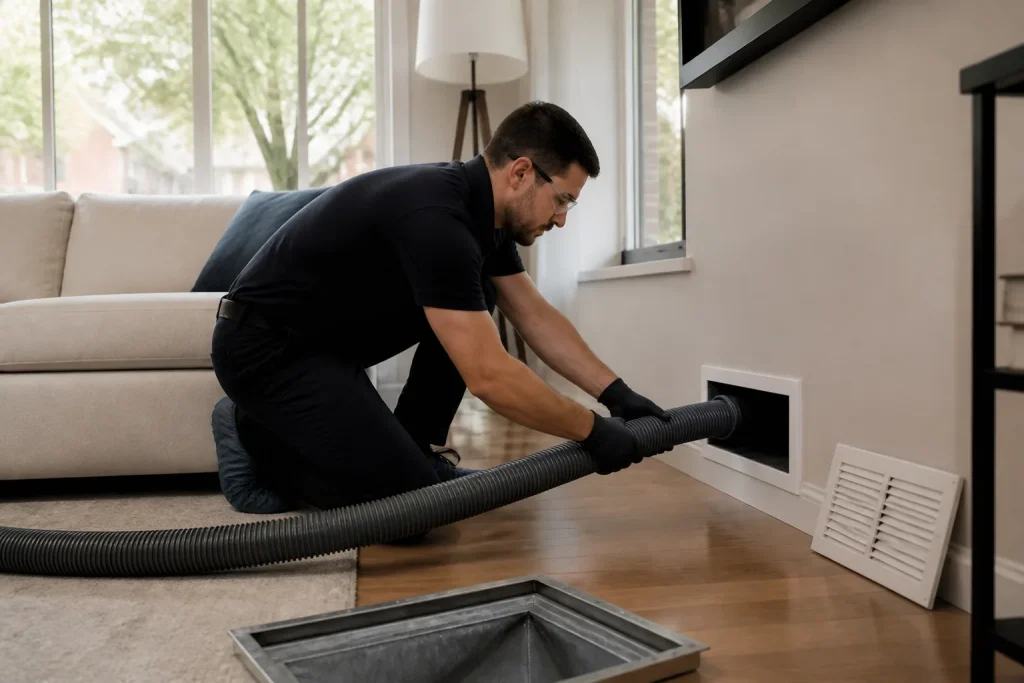
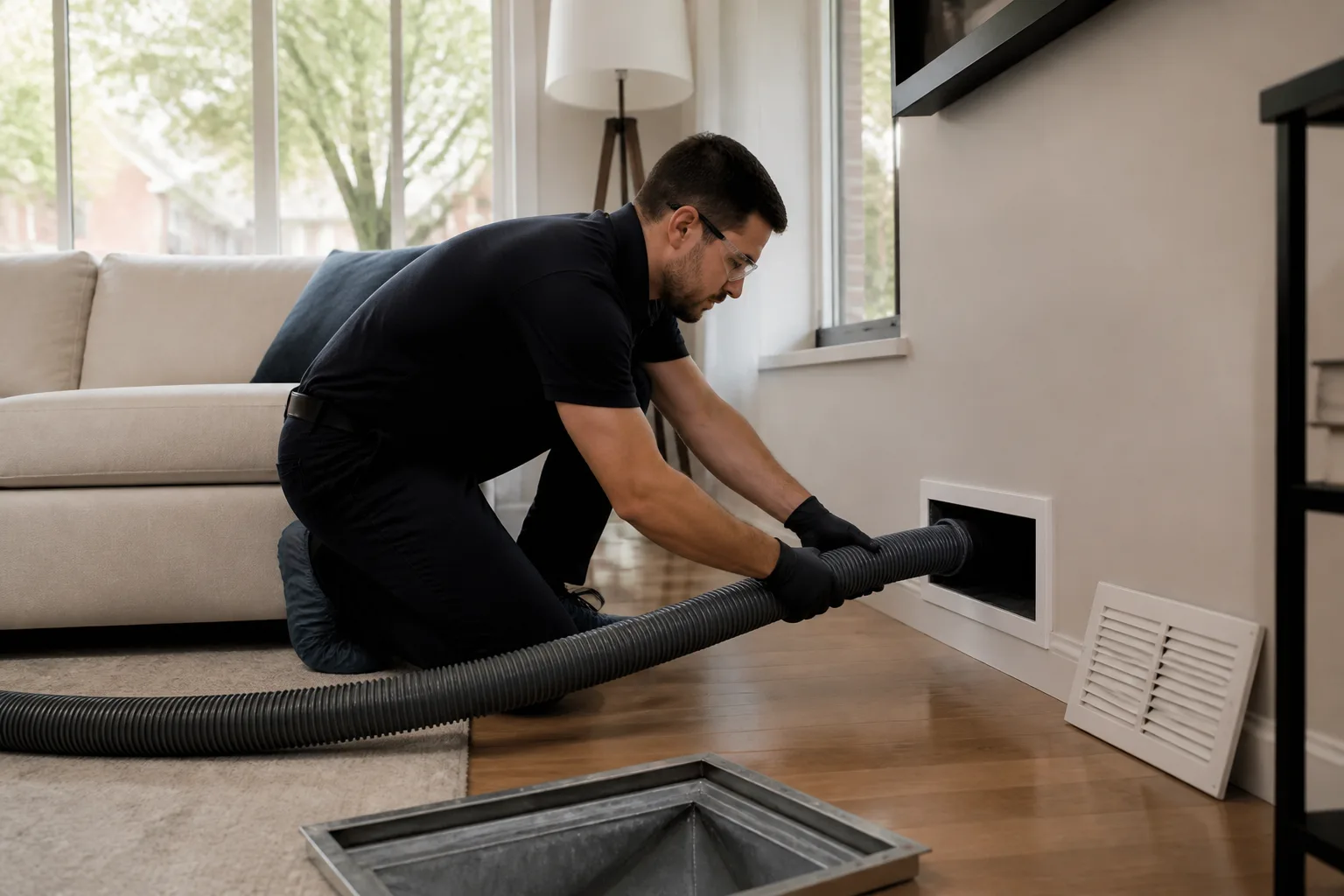
If a contractor tells you they use “Nikro equipment” as a selling point, that’s a reasonable signal. Nikro makes serious negative-pressure machines that professionals rely on. But the brand name tells you nothing about whether the technician will actually use it on your entire system or just your supply vents, and that gap is where most duct cleaning disappoints. Here’s what Nikro equipment really does, what a proper job looks like in a Forest Hills home, and the questions that separate a genuine source-removal cleaning from a quick surface pass.
If you’d rather not sort through the jargon yourself, call (844) 274-2194 and we’ll walk you through what a full-system cleaning involves.
What does Nikro actually manufacture for duct cleaning?
Nikro Industries builds a range of professional-grade equipment. Understanding what each piece is designed to do helps you follow the conversation when a contractor explains their setup. The main categories are:
- Negative air machines – Portable or truck-mounted vacuums that pull large volumes of air out of the duct system, creating pressure that draws debris toward the collection point rather than pushing it into your living space.
- Duct cleaning robots and agitation tools – Motorized brushes, whips, and air-driven tools that travel inside the ductwork to dislodge debris from the walls. A vacuum alone can’t pull off what’s stuck to the metal or flex duct surface; agitation is what frees it.
- Inspection cameras – Crawl cameras that let a technician see inside the ducts before and after cleaning, so they can confirm the work was done rather than assume it.
- HEPA filtration units – Attachments that trap fine particles so they don’t exhaust back into the room during the cleaning process.
In a Forest Hills home, especially in older buildings where duct runs may be long or oddly routed, that combination of vacuum, agitation, and inspection is what makes source removal possible. Without all three working together, you’re moving dust around rather than taking it out.
Does owning Nikro equipment mean the job will be done correctly?
No. Owning a Nikro machine and using it correctly are two different things. The machine is capable; the technique determines the result. A contractor can show up with a proper negative air machine and still clean only the accessible supply runs, skip the return side, and leave the air handler untouched. That’s not a full cleaning, even if the equipment is right.
The difference comes down to two things: where the negative pressure is established, and how much of the system is in scope.
- System-level negative pressure means the vacuum is connected to the main trunk or plenum, drawing air from the entire duct network at once. This creates a pressure differential that pulls debris toward the vacuum from every branch.
- Register-level vacuuming means the hose is placed at individual vents, one at a time. This creates localized suction with limited reach into the branch runs and almost none into the main trunk or return side.
Source removal requires the first approach. A Nikro machine parked next to a register and run for twenty minutes isn’t doing what the equipment was designed for. If you’re evaluating a quote in Forest Hills, the question isn’t whether they own the equipment – it’s how they plan to use it.
What should a Nikro-equipped cleaning job look like in a Forest Hills home?
A proper full-system cleaning follows a sequence. Every step serves a purpose, and skipping any of them leaves debris in place or redistributes it. Here’s what the process should look like from start to finish:
- Inspection and access. The technician inspects the system with a camera and identifies where to cut access panels. In Forest Hills homes, older duct layouts often mean the main trunk isn’t accessible from a single point, so multiple panels may be needed.
- Containment setup. Drop cloths and plastic sheeting protect floors and furniture. Every register opening is either sealed or connected to the vacuum system, and openings in the living space are controlled so dust doesn’t escape.
- Negative machine placement. The Nikro negative air machine connects to the main trunk or plenum, typically through an access panel near the air handler. This is what establishes system-wide negative pressure and keeps debris moving toward the collection point.
- Agitation in sequence. The technician works through the system methodically – main trunk first, then branch runs, then individual registers. Rotary brushes, air whips, or compressed-air tools travel through each run while the vacuum pulls loosened debris back toward the negative machine.
- Air handler and coil. The blower compartment, evaporator coil, and cabinet interior should be part of the scope. Debris collecting there can recontaminate the ducts after cleaning is complete.
- Post-cleaning inspection and sealing. The camera goes back in to confirm the runs are clean, and access panels are sealed properly. Loose or improperly sealed panels are their own problem: they leak air, waste energy, and let attic or basement air into the system.
If any of these steps are missing from a quote, ask why. A reputable technician shouldn’t have trouble explaining the sequence.
What questions should you ask a contractor who cites equipment brand?
Equipment brand is a starting point, not an answer. These questions get you to the details that actually determine whether the job is thorough. Any competent technician will answer them without hesitation.
- What is the CFM rating of the vacuum you’ll use? CFM (cubic feet per minute) is the measure of airflow. Higher CFM means more air moving through the system and better source removal. Ask for the number, not just the brand.
- How will you create negative pressure in the system? The answer should involve connecting to the main trunk or plenum, not placing a vacuum at individual registers. If the answer is vague, that’s a signal.
- Will the air handler be included in the cleaning scope? Cleaning the ducts without the air handler leaves debris in place that can blow back into the supply runs. The blower and coil should be part of the job.
- How will you verify the work? Before-and-after photos on your own system, or a camera inspection, are reasonable to expect. If they can’t show you the result, you can’t confirm it was done.
- What happens to any debris that’s loosened but not captured? This is where HEPA filtration matters. A negative air machine exhausting without filtration can put fine particles back into the room air.
One light note: if a contractor’s only answer to the equipment question is a decal on the side of the machine, that’s not a technical explanation. A technician who knows their equipment can tell you what it does and why it matters for your specific system.
Why professional equipment still isn’t enough on its own
A Nikro machine used only on accessible supply runs is less effective than a thorough job done with any quality negative-pressure system applied to the full air pathway. That sounds like a contradiction in a post about Nikro equipment, but it isn’t – it’s the point. Equipment enables a good job; it doesn’t guarantee one.
What gets left out when a cleaning is done quickly or partially?
- The return side. Return ducts carry air back to the air handler and often collect more dust than supply runs. A cleaning that skips them leaves a significant source of debris in place.
- The main trunk. The largest duct run in the system, and often the dustiest. If the vacuum isn’t connected there, the trunk never gets cleaned effectively.
- The air handler and coil. The blower wheel and evaporator coil collect dust, and that dust re-enters the airstream every time the system runs.
- Duct leaks and gaps. Old ductwork in some Forest Hills homes has gaps at joints and connections. Leaks pull in air from unconditioned spaces and can recontaminate clean ducts. Cleaning without addressing leaks doesn’t fix the underlying problem.
Clean ducts are only part of the solution – sealed, intact ducts are the other. That’s why the full-system approach matters. It’s also why we pair professional-grade equipment with sealing and repair capability: the vacuum brand matters, but so does the scope of what gets cleaned and what gets fixed.
When to call a pro
If you’re seeing visible dust streaks at the registers, noticing musty odors when the system kicks on, or dealing with allergy symptoms that seem to get worse indoors, those are reasonable signals to schedule an inspection. Uneven airflow from room to room can also point to duct problems that cleaning alone won’t solve. Our technicians have up to 13 years of experience with these systems, and we can walk through what’s actually going on rather than guess.
Related services in Forest Hills: if your dryer vent cleaning hasn’t been done in a while, or your HVAC cleaning is overdue, both are worth adding to the same visit. For a full-system deep clean, start with air duct cleaning and we’ll scope the rest from there.
The Bottom Line
Nikro equipment is a legitimate signal – Nikro makes professional-grade negative pressure machines, agitation tools, and inspection cameras, and serious contractors use them. But the brand on the side of the machine isn’t what makes your ducts clean. Three things do: negative pressure established at the system level, the full air pathway in scope including the air handler and return side, and a technician who knows how to use the equipment properly.
Key Takeaways: Ask about CFM rating, negative pressure placement, and air handler scope. Verify the job with before-and-after photos. And remember that sealing and repair matter as much as cleaning – a sealed system stays clean longer.
If you’re in Forest Hills and need help, Forest Hills Air Duct Cleaning offers free estimates – call (844) 274-2194. We answer 24/7. Fast dispatch from 7am to 7pm, Sunday through Friday. We use the same equipment professionals rely on: Rotobrush and Nikro, along with Aprilaire filtration components and Guardsman-level sanitizing after the clean.
Frequently Asked Questions
Nikro is a well-regarded manufacturer of professional-grade duct cleaning equipment, but “better” depends on the job and the technician. What matters more is whether the equipment is used to create system-level negative pressure and whether the full air pathway is cleaned. A thorough job with any quality negative-pressure system beats a partial job with the best equipment on the market.
Ask three questions: What is the CFM rating of the vacuum they’ll use, where does it connect to create negative pressure, and is the air handler included in the scope. A qualified technician will answer all three without hesitation. If they can’t explain where the machine connects and why, that’s a sign the job isn’t being done with a technical process. Call (844) 274-2194 for a free estimate.
Pricing depends on the size of the system and how many duct runs are involved. We don’t quote per-vent – we price a flat rate for the whole system after the estimate, so you know the full scope and cost before work starts. That’s the right way to compare quotes, since a per-vent price can lead to a very different final number. Call (844) 274-2194 for a free estimate.
Yes. A before-and-after camera inspection or photo documentation on your own system is the most reliable way to confirm the work was actually done. If a contractor doesn’t offer this, ask for it. A thorough cleaning is verifiable – you shouldn’t have to take it on faith. Call (844) 274-2194 and we’ll walk you through what a full inspection includes.
Written by the team at Forest Hills Air Duct Cleaning.
Need Air Duct Cleaning Help?
Call Forest Hills Air Duct Cleaning - the local pro we connect you with is licensed and insured, here with fast help in Forest Hills.
(844) 274-2194